
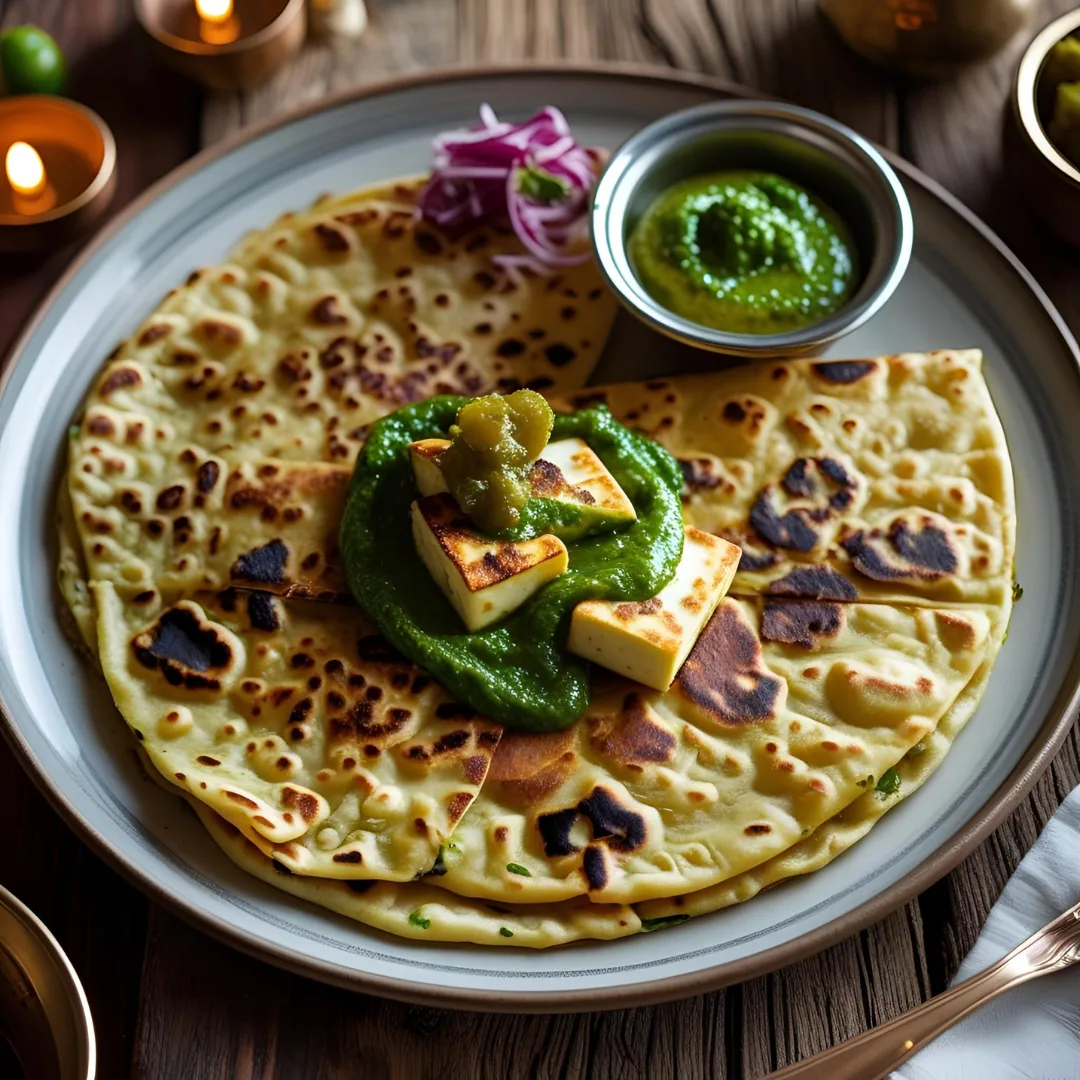
Take a delicious trip to North India with the classic Paneer Paratha! This soft, whole wheat flatbread is stuffed with a tasty mix of crumbled paneer (Indian cottage cheese) and aromatic spices.Paneer Paratha has a soft, creamy filling and is full of flavor. It is a comforting dish you can enjoy for breakfast, lunch, or dinner.
It’s wholesome, satisfying, and easy to enjoy with sides like fresh yogurt, spicy pickles, or zesty chutneys. A favorite in many Indian homes, Paneer Paratha brings both taste and tradition to your plate.
Let’s get started!
What is Paneer Paratha?
Paneer Paratha is a savory, stuffed flatbread where a soft, kneaded dough made from whole wheat flour encases a rich and aromatic filling. The star of this filling is paneer, a fresh, non-melting cheese curd widely used in Indian cuisine. The paneer is typically crumbled or grated and then mixed with a blend of finely chopped aromatics and ground spices.
About Paneer Paratha
Paneer Paratha is more than just a dish; it’s a staple comfort food in many North Indian households. Paneer Paratha is a type of Indian flatbread made from whole wheat flour, water, and salt. It is cooked on a hot griddle with ghee or oil.. What sets Paneer Paratha apart is its delectable filling.
PrintPaneer Paratha recipe: Easy Stuffed Flatbread at Home
Ingredients
Crafting the perfect Paneer Paratha begins with understanding each ingredient’s role in both the dough and the flavorful stuffing.
For the Dough (Outer Layer)
- Whole Wheat Flour (Atta) – 1.5 cups
This is the base for the paratha. It gives the outer layer a soft, yet slightly crisp texture when cooked.
- Salt – ½ tsp
Enhances the flavor of the dough.
- Water – As needed
Used to knead the flour into a smooth, soft dough.
- Oil/Ghee – 1 tsp (optional)
Added while kneading or brushing on the dough to make it more pliable.
For the Paneer Filling
- Paneer (Indian cottage cheese) – 1 cup (grated or crumbled)
The star ingredient. It adds creaminess, protein, and richness. Homemade or softened store-bought paneer works best.
- Green Chillies – 1–2 (finely chopped)
Adds a slight kick and freshness.
- Coriander Leaves (Dhaniya) – 2 tbsp (chopped)
Brings in a fresh, herbaceous note that lifts the filling.
- Spices:
Cumin Powder – ½ tsp
Red Chili Powder – ¼ tsp
Garam Masala – ½ tsp
Salt – to taste
These spices give the filling its signature North Indian flavor – warm, aromatic, and lightly spiced.
- Optional Add-ins:
Grated Onion or Carom Seeds (Ajwain) – for added flavor and digestion support.
For Cooking
- Ghee or Oil – 1–2 tsp per paratha
Used while roasting the parathas on the tawa. Ghee gives a rich flavor, while oil keeps it lighter.
How to make Stuffed Paneer Paratha (Stepwise)
Making Paneer Paratha involves two main components: preparing the dough and creating the stuffing, followed by the crucial assembly and cooking.
Prep Time: 30 mins (Dough resting + stuffing prep)
Cook Time: 15-20 mins
Serves: 3–4 people (yields approx. 6-8 parathas)
Ingredients:
For the Dough:
2 cups whole wheat flour (atta)
1 tsp salt
1 tbsp oil (or ghee)
Water (as needed, approx. ¾ to 1 cup)
For the Paneer Filling:
200g paneer (crumbled or grated, approx. 1 cup)
1 small onion, very finely chopped (optional)
1 green chili, finely chopped (adjust to taste)
1 tsp cumin powder
1 tsp coriander powder
½ tsp garam masala
½ tsp red chili powder (adjust to taste)
Salt to taste
2 tbsp fresh coriander leaves, finely chopped
For Cooking:
Ghee or oil, as needed (approx. 3-4 tbsp total)
Extra whole wheat flour for dusting while rolling
Instructions
Make the Dough (The Foundation)
This is the initial and crucial step for soft parathas.
- Combine Dry Ingredients: In a large mixing bowl, combine 2 cups whole wheat flour (atta) and 1 tsp salt. Mix them well with your hand.
- Add Fat: Add 1 tbsp oil (or ghee) to the flour mixture. Rub the oil into the flour using your fingertips, until the mixture resembles coarse breadcrumbs and no lumps of oil remain. This step helps in making the parathas soft.
- Knead with Water: Gradually add water (approx. ¾ cup to 1 cup), a little at a time, and start kneading. Continue to add water as needed until you form a soft, pliable, and smooth dough. The dough should not be sticky, nor should it be too stiff (a stiff dough will make hard parathas and tear easily when stuffed). Knead the dough vigorously for at least 5-7 minutes until it is elastic and smooth.
- Rest the Dough: Once kneaded, gather the dough into a ball. Lightly coat the surface of the dough with a few drops of oil. Cover the bowl with a clean kitchen cloth or plastic wrap and let the dough rest for at least 15-20 minutes (or up to 30 minutes). Resting allows the gluten to relax, making the dough easier to roll and the parathas softer.
Prepare the Paneer Stuffing (The Flavorful Heart)
While the dough rests, prepare your delicious filling.
- Prepare Paneer: If using a block of paneer, either crumble it finely with your hands or grate it into a mixing bowl. Ensure there are no large lumps. If using store-bought paneer, soaking it in warm water for 10-15 minutes before crumbling can improve its softness.
- Add Aromatics & Spices: To the crumbled paneer, add 1 small onion (very finely chopped, if using), 1 green chili (finely chopped), 1 tsp cumin powder, 1 tsp coriander powder, ½ tsp garam masala, ½ tsp red chili powder, and salt to taste.
- Mix Thoroughly: Add 2 tbsp finely chopped fresh coriander leaves. Using your hands, gently but thoroughly mix all the ingredients. Ensure the spices are evenly distributed throughout the paneer. Do not over-mash the paneer; keep it crumbly. Taste and adjust salt or spice if needed.
Assemble the Paratha (The Art of Stuffing)
This step requires a gentle touch to ensure even stuffing and no tearing.
- Divide Dough: Gently punch down the rested dough. Divide the dough into 6-8 equal portions and roll each portion into a smooth ball.
- Prepare Work Surface: Lightly dust your rolling surface (a clean counter or rolling board) and your rolling pin with whole wheat flour.
- Create Pouch: Take one dough ball. Using your rolling pin, roll it out into a small circle of about 3-4 inches in diameter (like a small puri). The edges should be slightly thinner than the center.
Place Stuffing: Place a generous amount (about 2-3 tablespoons, depending on the dough ball size) of the prepared paneer stuffing in the center of the rolled-out dough circle.
- Seal the Edges: Carefully bring all the edges of the dough circle together towards the center, gathering them around the stuffing. Pinch the edges tightly to seal the stuffing completely inside the dough, forming a neat ball. Press down the sealed top portion gently to flatten it slightly. This is crucial to prevent the stuffing from coming out while rolling.
Gently Roll: Lightly dust the sealed dough ball with flour. Gently and evenly, using your rolling pin, roll out the stuffed dough ball into a flatbread of about 6-7 inches in diameter. Apply very gentle and even pressure to prevent the stuffing from tearing through the dough. If it sticks, dust lightly with flour. Aim for an even thickness throughout.
Cook the Paratha (Achieving Golden Perfection)
The final step brings the paratha to life.
- Heat Tawa: Place a tawa (flat griddle or heavy-bottomed frying pan) on medium-high heat. Let it heat up thoroughly for 2-3 minutes.
Place Paratha: Once the tawa is hot, carefully place one rolled-out paratha onto the hot surface.
- Initial Cook: Cook for about 30 seconds to 1 minute until you see small bubbles appearing on the surface and the dough looks slightly cooked.
- Apply Ghee/Oil & Flip: Drizzle about ½ to 1 teaspoon of ghee or oil over the surface of the paratha. Flip the paratha using a spatula.
- Cook Second Side: Cook the second side for another 1-2 minutes, pressing gently with the spatula (especially around the edges) to ensure even cooking and to encourage puffing.
- Apply Ghee/Oil & Flip Again: Drizzle another ½ to 1 teaspoon of ghee or oil on the second side. Flip the paratha again.
- Cook Until Golden & Crispy: Cook for another 1-2 minutes, pressing gently, until both sides of the paratha are beautifully golden brown and have crispy spots. The paratha should puff up beautifully in places if well-sealed and rolled.
- Remove & Repeat: Once cooked, remove the Paneer Paratha from the tawa and place it in a warm container or on a plate. Repeat the cooking process for the remaining parathas.
Notes
Serve Hot:
Paneer Parathas are best enjoyed hot and fresh, straight off the tawa.
Serve with a dollop of white butter on top.
Accompanied by a side of plain yogurt (dahi).
A tangy pickle (achar) of your choice (mango, lemon, mixed vegetable).
Or a fresh mint chutney or coriander chutney.
Enhances the flavor of the dough.
Paneer Paratha Ingredients
To make the perfect Paneer Paratha, it’s important to understand the role of each ingredient in the dough and the stuffing.
For the Dough (Outer Layer)
- Whole Wheat Flour (Atta) – 1.5 cups
This is the base for the paratha. It gives the outer layer a soft, yet slightly crisp texture when cooked.
- Salt – ½ tsp
Enhances the flavor of the dough.
- Water – As needed
Used to knead the flour into a smooth, soft dough.
- Oil/Ghee – 1 tsp (optional)
Added while kneading or brushing on the dough to make it more pliable.
For the Paneer Filling
- Paneer (Indian cottage cheese) – 1 cup (grated or crumbled)
The star ingredient. It adds creaminess, protein, and richness. Homemade or softened store-bought paneer works best.
- Green Chillies – 1–2 (finely chopped)
Adds a slight kick and freshness.
- Coriander Leaves (Dhaniya) – 2 tbsp (chopped)
Brings in a fresh, herbaceous note that lifts the filling.
- Spices:
Cumin Powder – ½ tsp
Red Chili Powder – ¼ tsp Garam Masala – ½ tsp
Salt – to taste These spices give the filling its signature North Indian flavor – warm, aromatic, and lightly spiced.
- Optional Add-ins:
Grated Onion or Carom Seeds (Ajwain) – for added flavor and digestion support.
For Cooking
- Ghee or Oil – 1–2 tsp per paratha
Used while roasting the parathas on the tawa. Ghee gives a rich flavor, while oil keeps it lighter.
How to make Stuffed Paneer Paratha (Stepwise)
Paneer Paratha is made in three simple steps: prepare the dough, make the stuffing, then assemble and cook the paratha.
Prep Time: 30 mins (Dough resting + stuffing prep)
Cook Time: 15-20 mins
Serves: 3–4 people (yields approx. 6-8 parathas)
Ingredients:
For the Dough:
2 cups whole wheat flour (atta)
1 tsp salt
1 tbsp oil (or ghee)
Water (as needed, approx. ¾ to 1 cup)
For the Paneer Filling:
200g paneer (crumbled or grated, approx. 1 cup)
1 small onion, very finely chopped (optional)
1 green chili, finely chopped (adjust to taste)
1 tsp cumin powder
1 tsp coriander powder
½ tsp garam masala
½ tsp red chili powder (adjust to taste)
Salt to taste
2 tbsp fresh coriander leaves, finely chopped
For Cooking:
Ghee or oil, as needed (approx. 3-4 tbsp total)
Extra whole wheat flour for dusting while rolling
Instructions:
Make the Dough (The Foundation)
This is the initial and crucial step for soft parathas.
- Combine Dry Ingredients: In a large mixing bowl, combine 2 cups whole wheat flour (atta) and 1 tsp salt. Mix them well with your hand.
- Add Fat: Add 1 tbsp oil (or ghee) to the flour mixture. Rub the oil into the flour using your fingertips, until the mixture resembles coarse breadcrumbs and no lumps of oil remain. This step helps in making the parathas soft.
- Knead with Water: Gradually add water (approx. ¾ cup to 1 cup), a little at a time, and start kneading. Continue to add water as needed until you form a soft, pliable, and smooth dough. The dough should not be sticky, nor should it be too stiff (a stiff dough will make hard parathas and tear easily when stuffed). Knead the dough vigorously for at least 5-7 minutes until it is elastic and smooth.
- Rest the Dough: Once kneaded, gather the dough into a ball. Lightly coat the surface of the dough with a few drops of oil. Cover the bowl with a clean kitchen cloth or plastic wrap and let the dough rest for at least 15-20 minutes (or up to 30 minutes). Resting allows the gluten to relax, making the dough easier to roll and the parathas softer.
Prepare the Paneer Stuffing (The Flavorful Heart)
While the dough rests, prepare your delicious filling.
- Prepare Paneer: If using a block of paneer, either crumble it finely with your hands or grate it into a mixing bowl. Ensure there are no large lumps. If using store-bought paneer, soaking it in warm water for 10-15 minutes before crumbling can improve its softness.
- Add flavor to the crumbled paneer with simple spices. Mix in:
- 1 small onion, finely chopped (optional)
- 1 green chili, finely chopped
- 1 tsp cumin powder
- 1 tsp coriander powder
- ½ tsp garam masala
- ½ tsp red chili powder
- Salt to taste
- Mix Thoroughly: Add 2 tbsp finely chopped fresh coriander leaves. Using your hands, gently but thoroughly mix all the ingredients. Ensure the spices are evenly distributed throughout the paneer. Do not over-mash the paneer; keep it crumbly. Taste and adjust salt or spice if needed.
Assemble the Paratha (The Art of Stuffing)
This step requires a gentle touch to ensure even stuffing and no tearing.
- Divide Dough: Gently punch down the rested dough. Divide the dough into 6-8 equal portions and roll each portion into a smooth ball.
- Prepare Work Surface: Lightly dust your rolling surface (a clean counter or rolling board) and your rolling pin with whole wheat flour.
- Create Pouch: Take one dough ball. Using your rolling pin, roll it out into a small circle of about 3-4 inches in diameter (like a small puri). The edges should be slightly thinner than the center.
Place 2 to 3 tablespoons of paneer stuffing in the center of the dough. The amount depends on the size of the dough ball.
Seal the Edges: Carefully bring all the edges of the dough circle together towards the center, gathering them around the stuffing. Pinch the edges tightly to seal the stuffing completely inside the dough, forming a neat ball. Press down the sealed top portion gently to flatten it slightly. This is crucial to prevent the stuffing from coming out while rolling.
Gently Roll: Lightly dust the sealed dough ball with flour. Gently and evenly, using your rolling pin, roll out the stuffed dough ball into a flatbread of about 6-7 inches in diameter. Apply very gentle and even pressure to prevent the stuffing from tearing through the dough. If it sticks, dust lightly with flour. Aim for an even thickness throughout.
Cook the Paratha (Achieving Golden Perfection)
The final step brings the paratha to life.
- Heat Tawa: Place a tawa (flat griddle or heavy-bottomed frying pan) on medium-high heat. Let it heat up thoroughly for 2-3 minutes.
Place Paratha: Once the tawa is hot, carefully place one rolled-out paratha onto the hot surface.
- Initial Cook: Cook for about 30 seconds to 1 minute until you see small bubbles appearing on the surface and the dough looks slightly cooked.
- Apply Ghee/Oil & Flip: Drizzle about ½ to 1 teaspoon of ghee or oil over the surface of the paratha. Flip the paratha using a spatula.
- Flip and cook the other side for 1 to 2 minutes. Press gently with a spatula, especially around the edges, to help it cook evenly and puff up.
- Apply Ghee/Oil & Flip Again: Drizzle another ½ to 1 teaspoon of ghee or oil on the second side. Flip the paratha again.
- Cook for 1 to 2 more minutes. Press gently until both sides turn golden brown with crispy spots. The paratha should puff up beautifully in places if well-sealed and rolled.
- Remove & Repeat: Once cooked, remove the Paneer Paratha from the tawa and place it in a warm container or on a plate. Repeat the cooking process for the remaining parathas.
Serve Hot:
Paneer Parathas are best enjoyed hot and fresh, straight off the tawa.
Serve with a dollop of white butter on top.
Accompanied by a side of plain yogurt (dahi).
A tangy pickle (achar) of your choice (mango, lemon, mixed vegetable).
Or a fresh mint chutney or coriander chutney.
Enhances the flavor of the dough.
Types of Paneer Paratha
Paneer Paratha is very versatile. You can add other vegetables or change the spices to create different flavors.
- Aloo Paneer Paratha:
Description: This version combines the best of two popular parathas: Aloo Paratha (potato-stuffed) and Paneer Paratha.
Filling: A hearty mix of finely crumbled or grated paneer and well-mashed boiled potatoes, seasoned with the usual paratha spices (ginger, green chilies, coriander, cumin, red chili, garam masala).
Characteristics: Extra hearty, more substantial, and offers a delightful creamy texture from the potatoes combined with the paneer.
Serving: Ideal for a very filling meal.
- Methi Paneer Paratha:
Description: Infused with the distinct, slightly bitter, and aromatic flavor of fresh fenugreek leaves (methi).
Filling: Finely chopped fresh methi leaves are thoroughly mixed with the spiced crumbled paneer. Blanching the methi leaves briefly before adding can reduce bitterness, or they can be added raw.
Characteristics: Adds a unique, earthy, and aromatic dimension. Fenugreek is also known for its health benefits.
Serving: A more gourmet and flavorful twist.
- Palak Paneer Paratha:
Description: A nutritious variation incorporating healthy spinach (palak) with paneer.
Filling: Blanched, finely chopped, or pureed spinach is mixed with the spiced crumbled paneer.
Characteristics: Boosts the nutritional content (iron, vitamins), adds a lovely green hue, and a subtle earthy flavor from the spinach.
Serving: An excellent way to include more greens in the diet.
- Paneer Pyaz Paratha (Onion Paneer Paratha):
Description: Specifically highlights the addition of finely chopped onions to the paneer filling.
Filling: While onions are often an optional component in standard Paneer Paratha, this variation emphasizes their presence, often in slightly larger quantities, ensuring a distinct onion flavor and crunchy texture.
Characteristics: Adds a wonderful sweetness and a pleasant textural crunch, along with a sharp, pungent kick that complements the mild paneer.
Serving: A very popular combination, especially for those who enjoy the bite of onions.
- Beetroot Paneer Paratha:
Description: A visually striking and subtly sweet and earthy variation.
Filling/Dough: Grated raw beetroot can either be mixed directly into the paneer filling, or more commonly, pureed beetroot is added to the dough itself, giving the entire paratha a vibrant pink hue. The paneer filling remains the same.
Characteristics: Offers a sweet, earthy taste, boosts nutritional value (iron, antioxidants), and creates a beautiful, eye-catching paratha.
Serving: Great for adding color to your meal or encouraging kids to eat vegetables.
- Paneer Paratha Without Stuffing (Direct Mix):
Description: As detailed previously, this is a quick and convenient version where the crumbled paneer and spices are mixed directly into the whole wheat flour while kneading the dough.
Characteristics: No stuffing hassle, quick to prepare, and ensures evenly distributed paneer flavor in every bite. Soft and flavorful, though without the distinct “pocket” of filling.
Ready to try this delicious recipe? Scroll down and cook it today!
Paneer Paratha Recipe: Quick Summary
Paneer paratha is a popular North Indian stuffed flatbread made with whole wheat dough and a flavorful filling of grated paneer (Indian cottage cheese), mixed with spices and herbs like cumin, coriander, green chilies, and fresh coriander leaves. The paratha is rolled out, stuffed, sealed, and cooked on a hot tawa with ghee or oil until golden brown and crisp. It’s a delicious, protein-rich dish often served with curd, pickle, or butter, making it a perfect choice for breakfast, lunch, or dinner.
What is Paneer paratha – FAQ
Yes, store-bought paneer works fine for Paneer Paratha. It’s convenient and easy to use. However, it may be firmer and less fresh than homemade paneer. To improve texture, soak it in warm water for 10–15 minutes, then drain and crumble. This softens the paneer, making it more suitable and flavorful for stuffing.
Hard parathas can result from stiff dough, overcooking, or using too much dry flour. Make sure the dough is soft, well-rested, and not over-kneaded. Use minimal dusting flour and enough ghee while cooking. Also, avoid overcooking on high heat. These small changes help keep your Paneer Paratha soft, layered, and delicious.
Yes, you can freeze cooked Paneer Parathas. Let them cool fully, stack with parchment paper between layers, and store in an airtight container or freezer bag. Reheat directly on a hot tawa or in an oven until warm and soft. This makes for a convenient, ready-to-eat meal anytime without compromising on taste.
Tofu is a great vegan substitute—firm and neutral, though it needs seasoning. Ricotta is creamy but must be well-drained. Feta adds a tangy twist and should be used sparingly due to its saltiness. Mashed potatoes work too but give a different flavor. Each option changes the taste, so choose based on your preference.
Keep parathas soft by wrapping them in a cloth or foil immediately after cooking to trap steam. Use well-kneaded, rested dough and enough ghee while cooking. Avoid overcooking and serve hot. These ste